Launch offer — valid today only

📄 Digital book in PDF · read it on your phone or print it

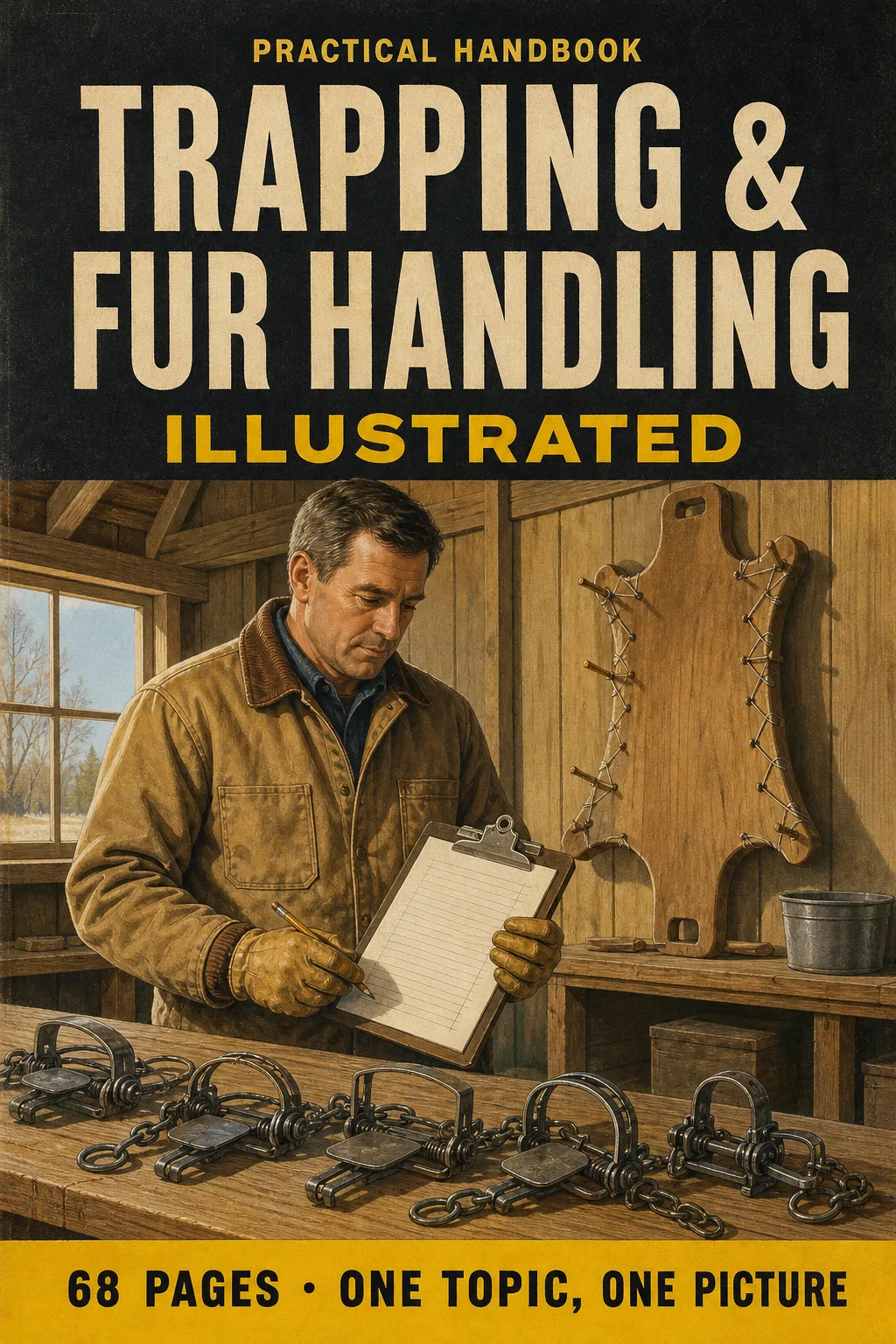
Trapper Education in Drawings: Every Furbearer, Trap and Set, Studied in the Same Order One Topic on Every Page

Furbearer ID, tracks and sign, foothold and body-grip traps, dry-land sets, water sets, trap checks, non-target release and fur handling. Every topic gets its own page: the drawing first, then what you need to remember. 68 illustrated pages.

START STUDYING THIS WAY

🔒 Secure checkout · PDF by email · 30-day guarantee

Every topic, its own pageEach trap and each set drawn, with the explanation right beside it
68 illustrated pages9 parts, from your trapper education course to test day
Up-to-date sourcesTraps cross-checked against the national trapping BMPs; anything that varies by state is marked VERIFY
PDF by emailFormat

Look Inside the Book

Every page has one big drawing and a box with the numbers and steps you need to know:

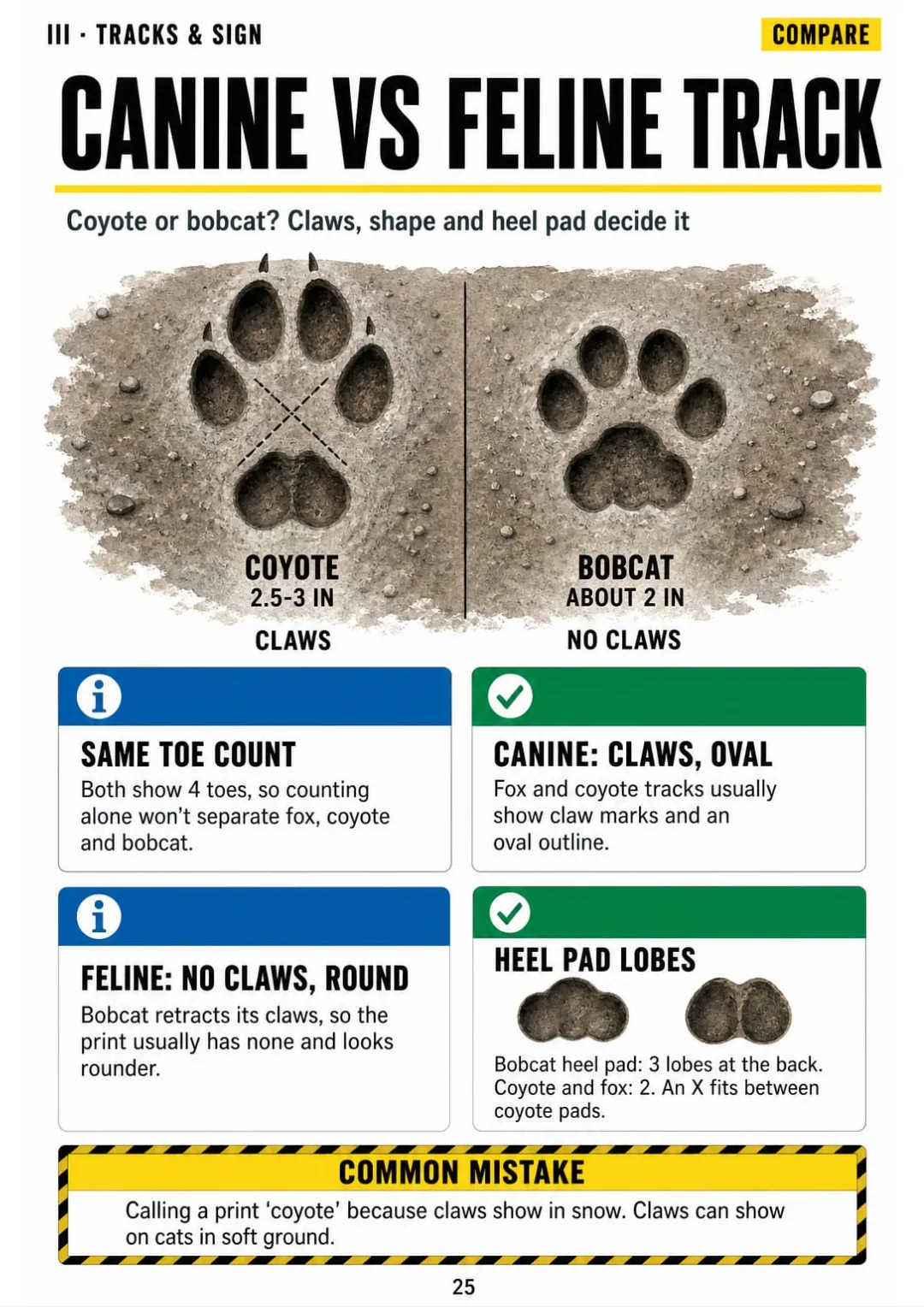
Coyote: oval, claws usually show. Bobcat: rounder, claws usually hidden. Both 4 toes.
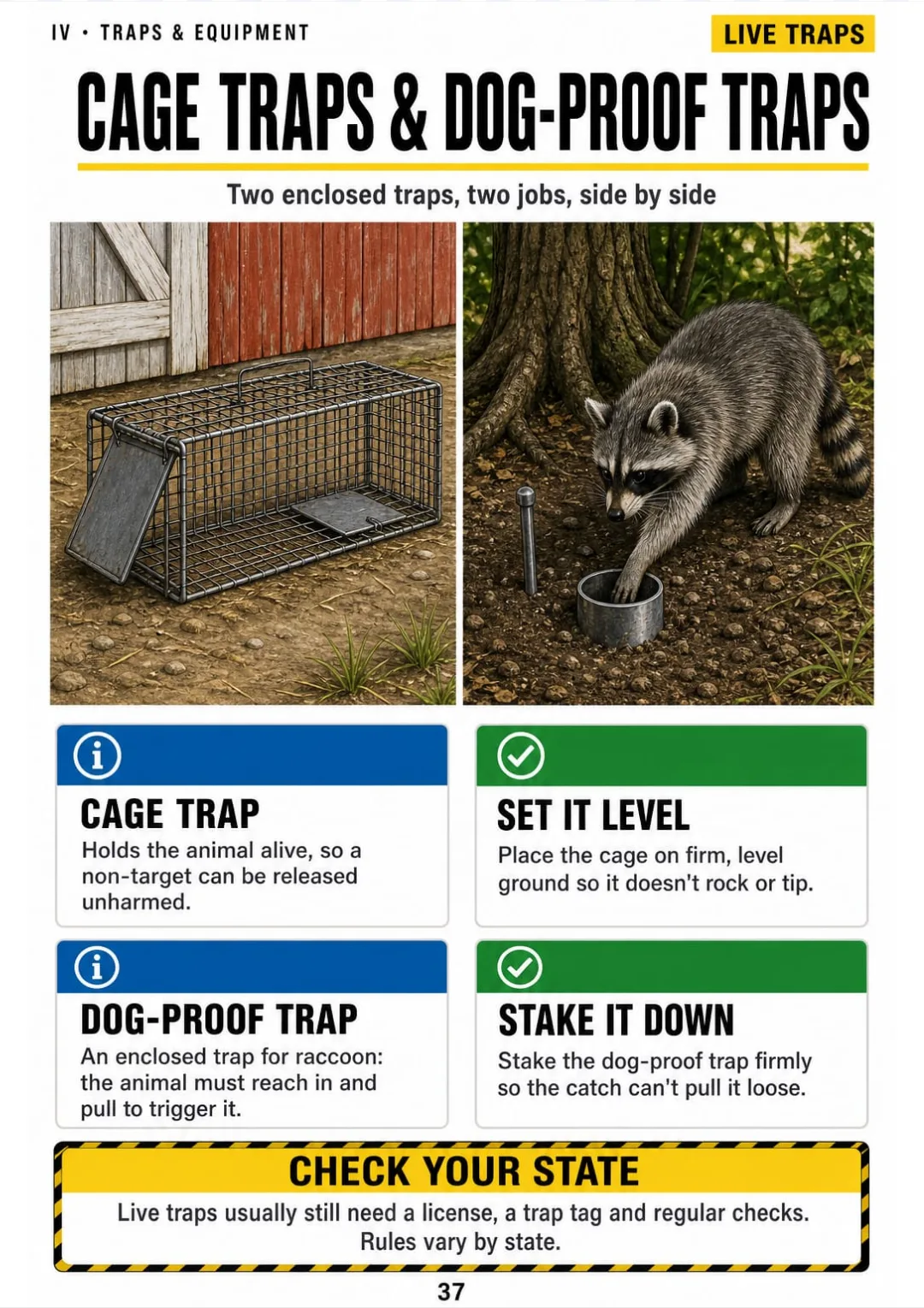
Cage traps hold alive; dog-proof traps need a pull to fire
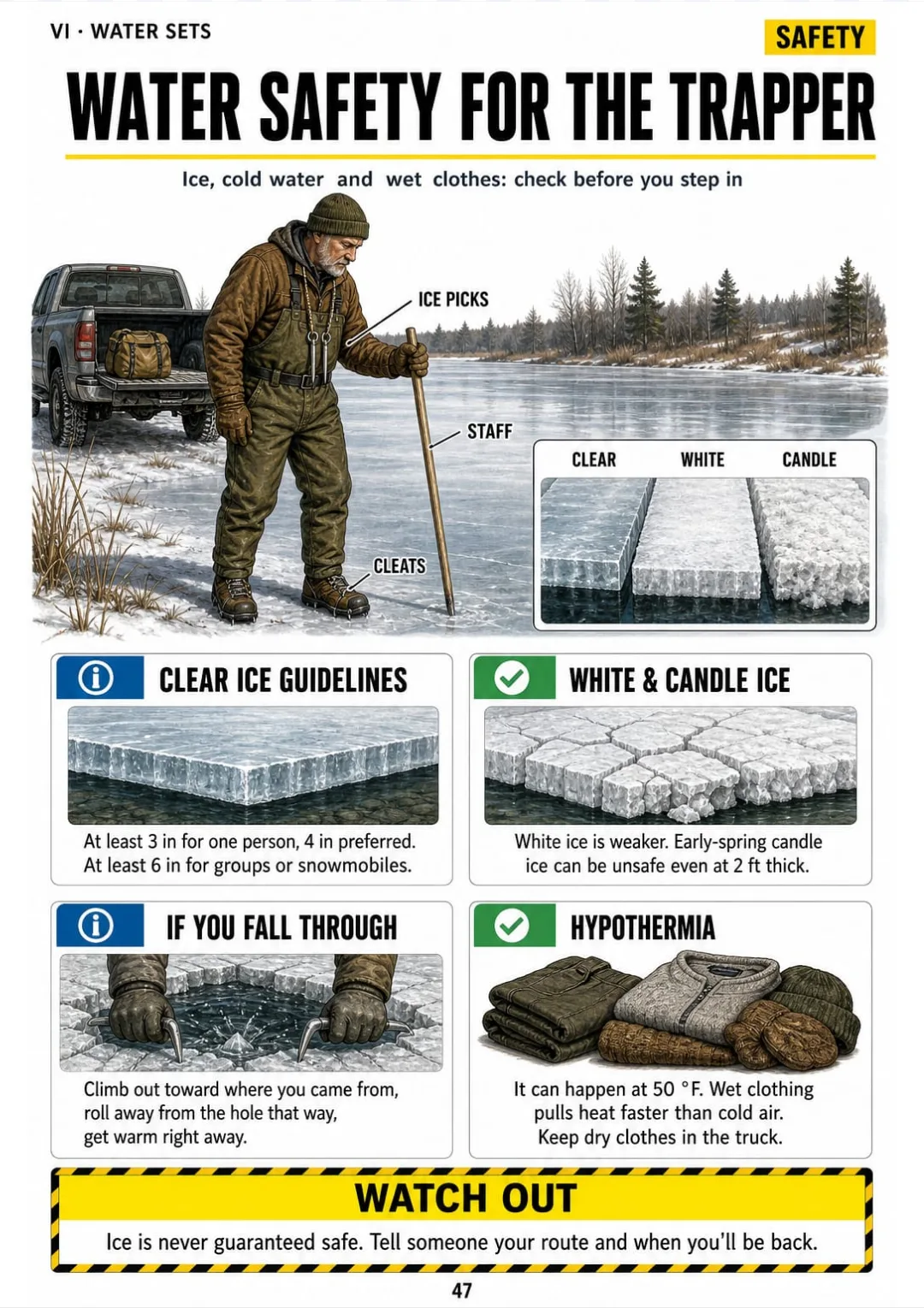
Clear ice: 3 in for one person, 6 in for groups. Hypothermia can start at 50 °F.
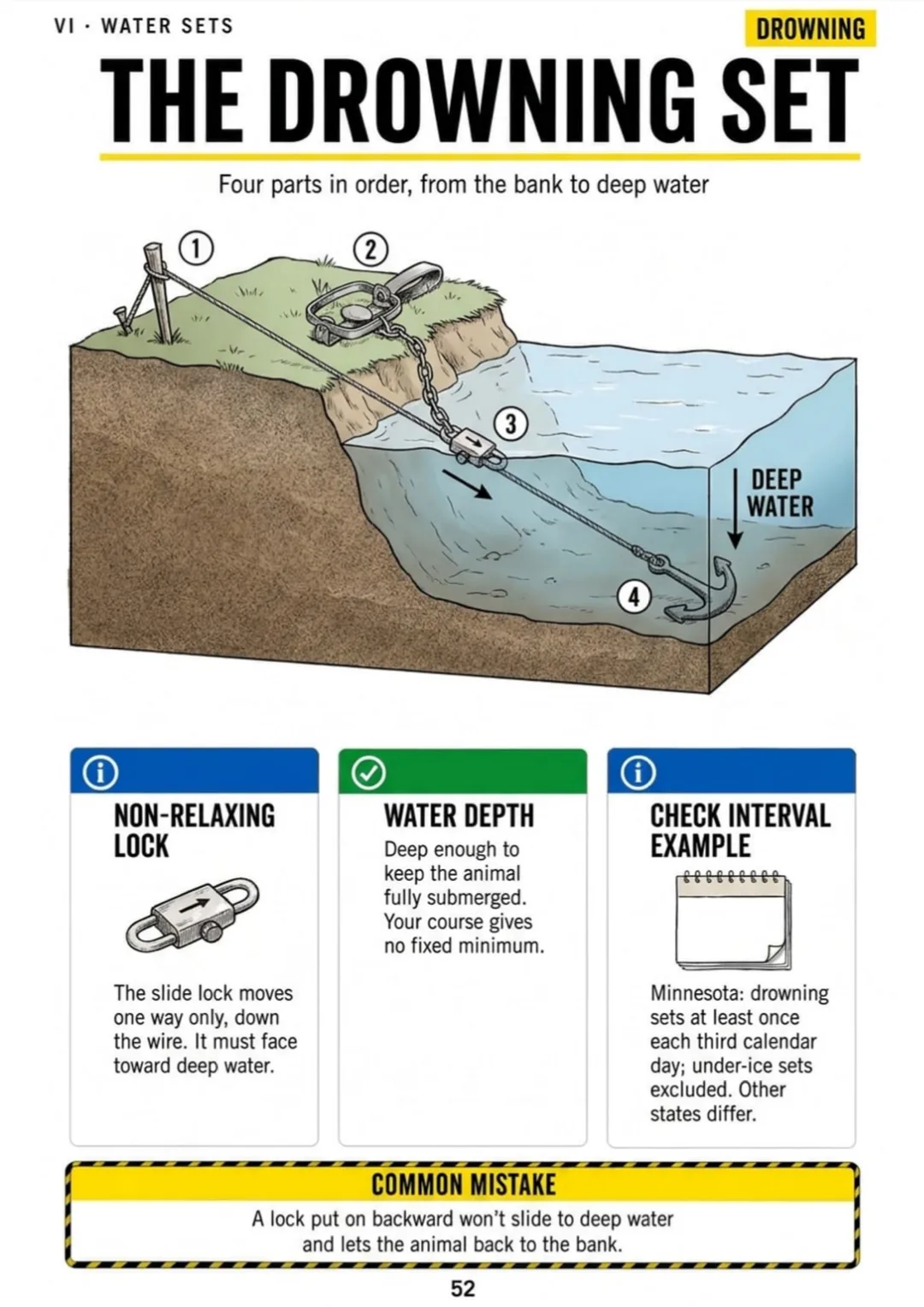
Drowning set: slide wire from bank stake to deep anchor, lock facing deep water.
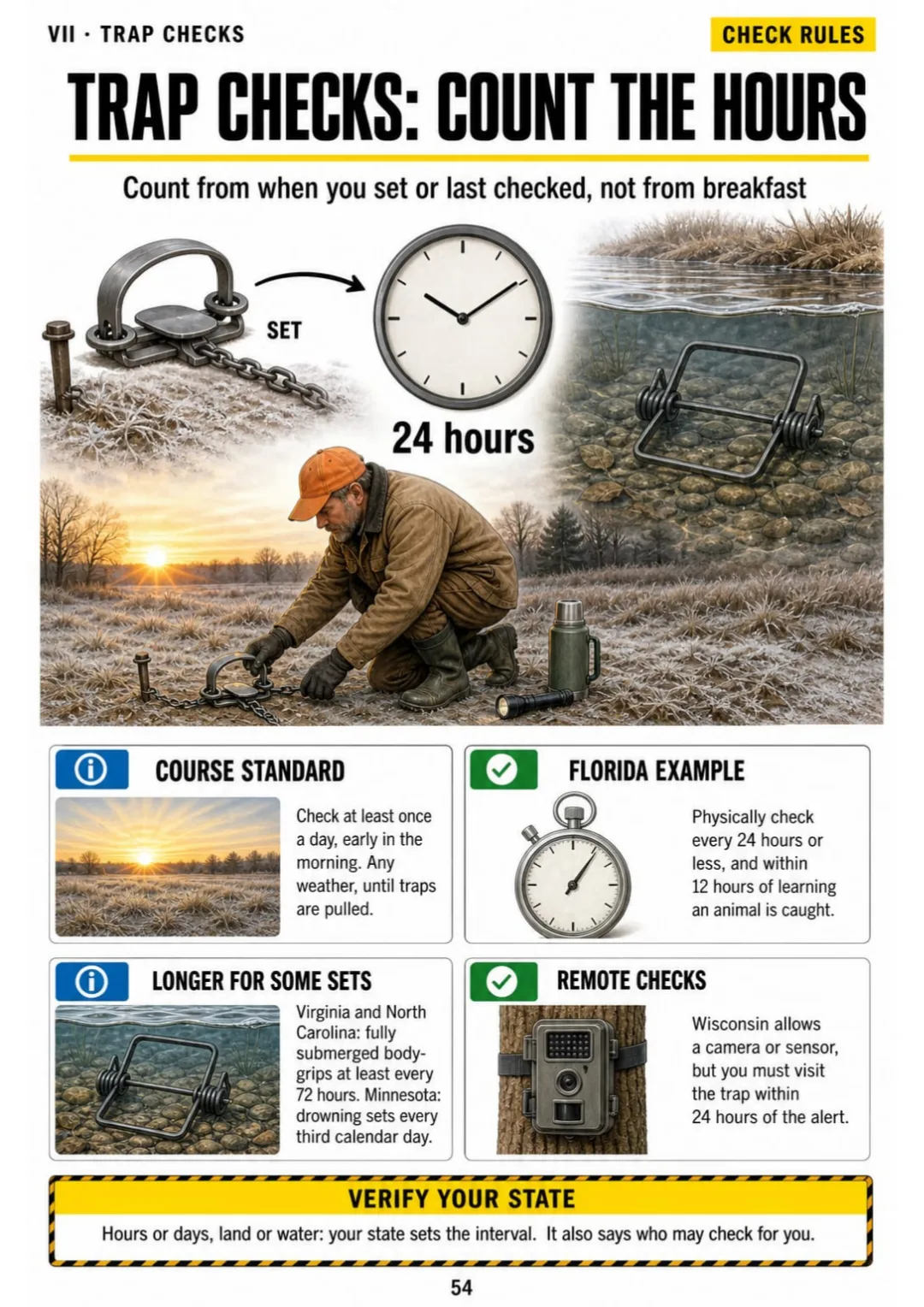
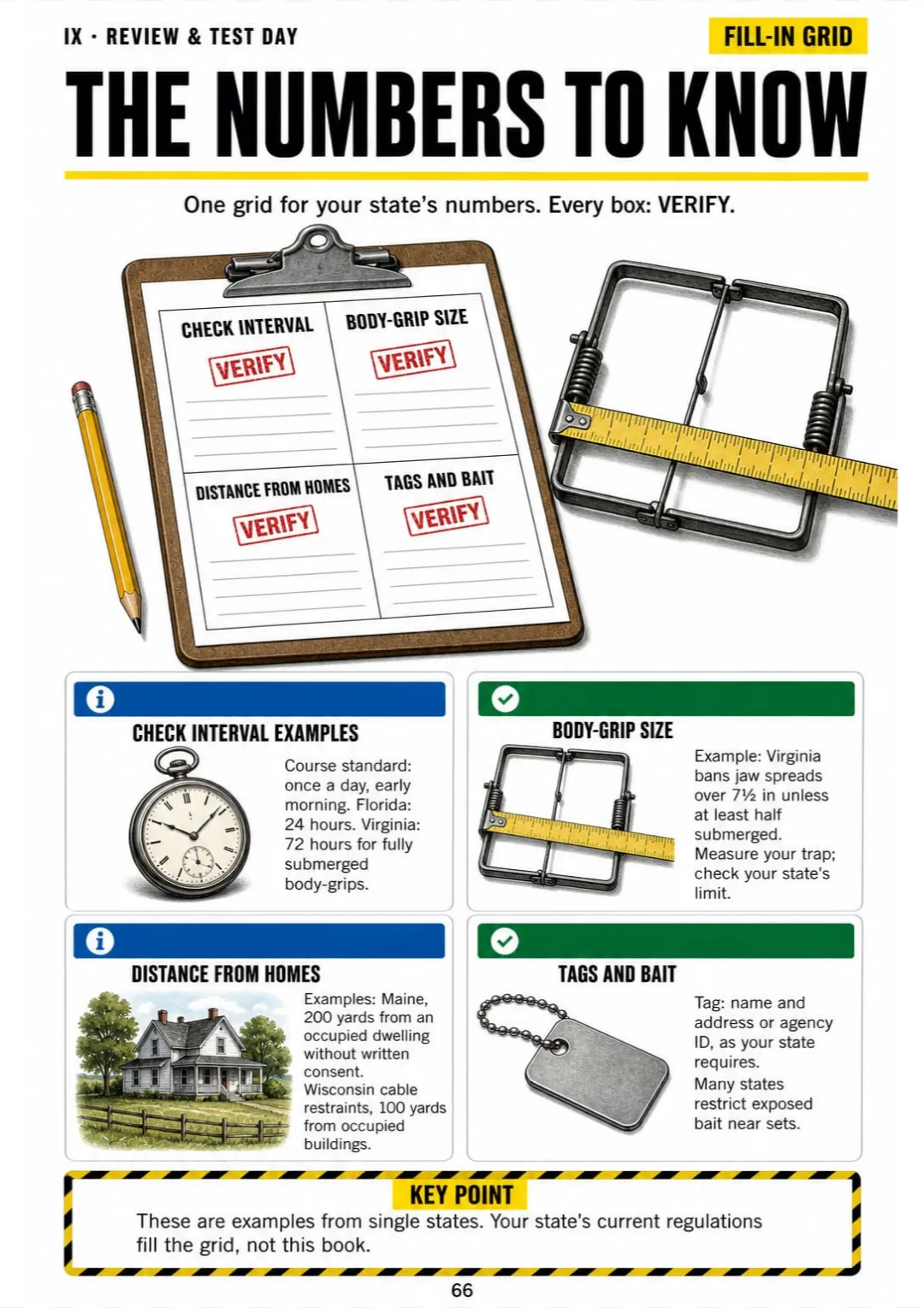
Florida 24 h, Virginia 72 h for submerged body-grips, Minnesota counts calendar days
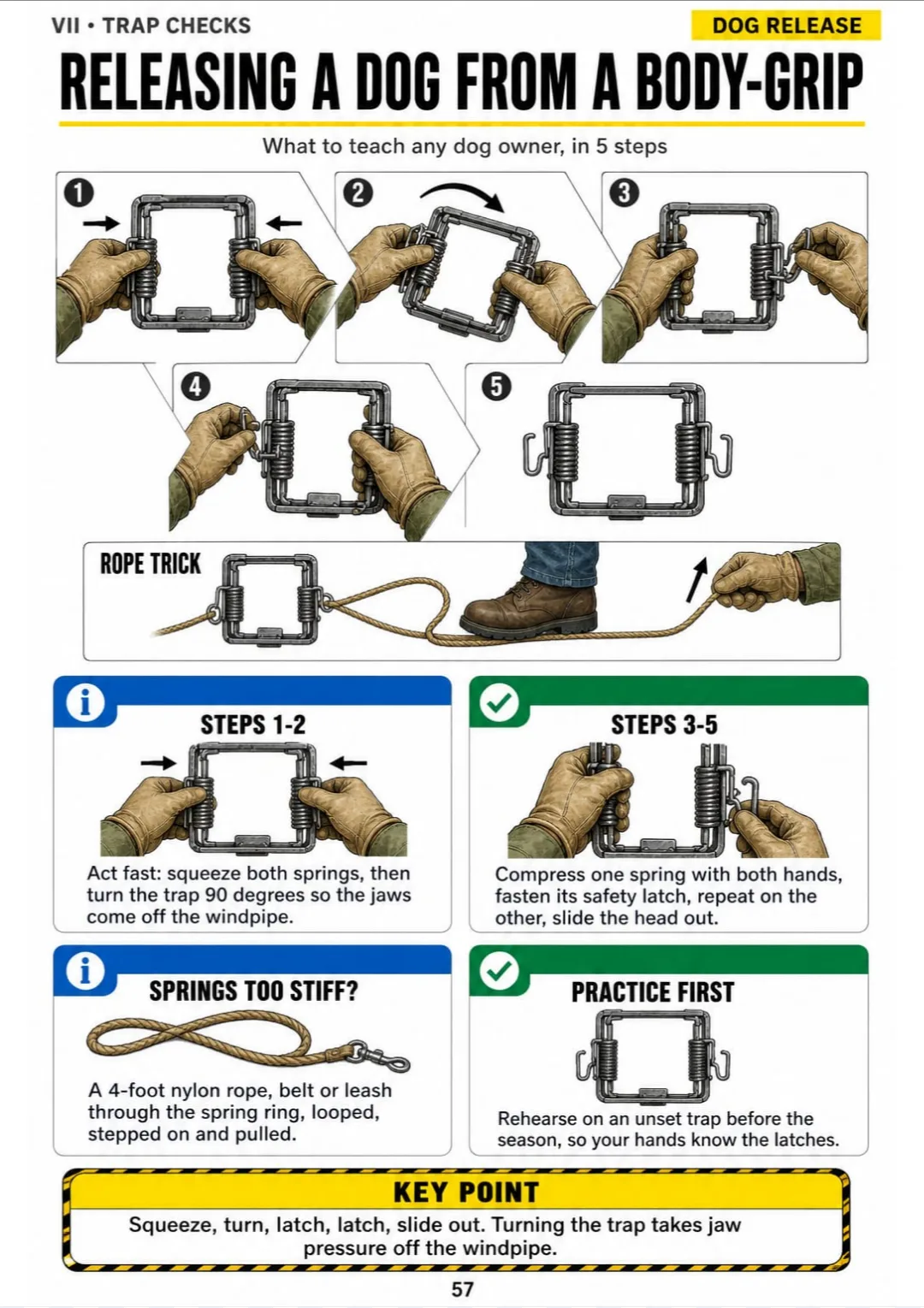
Squeeze, turn, latch one spring, latch the other, slide out; a 4-foot rope helps
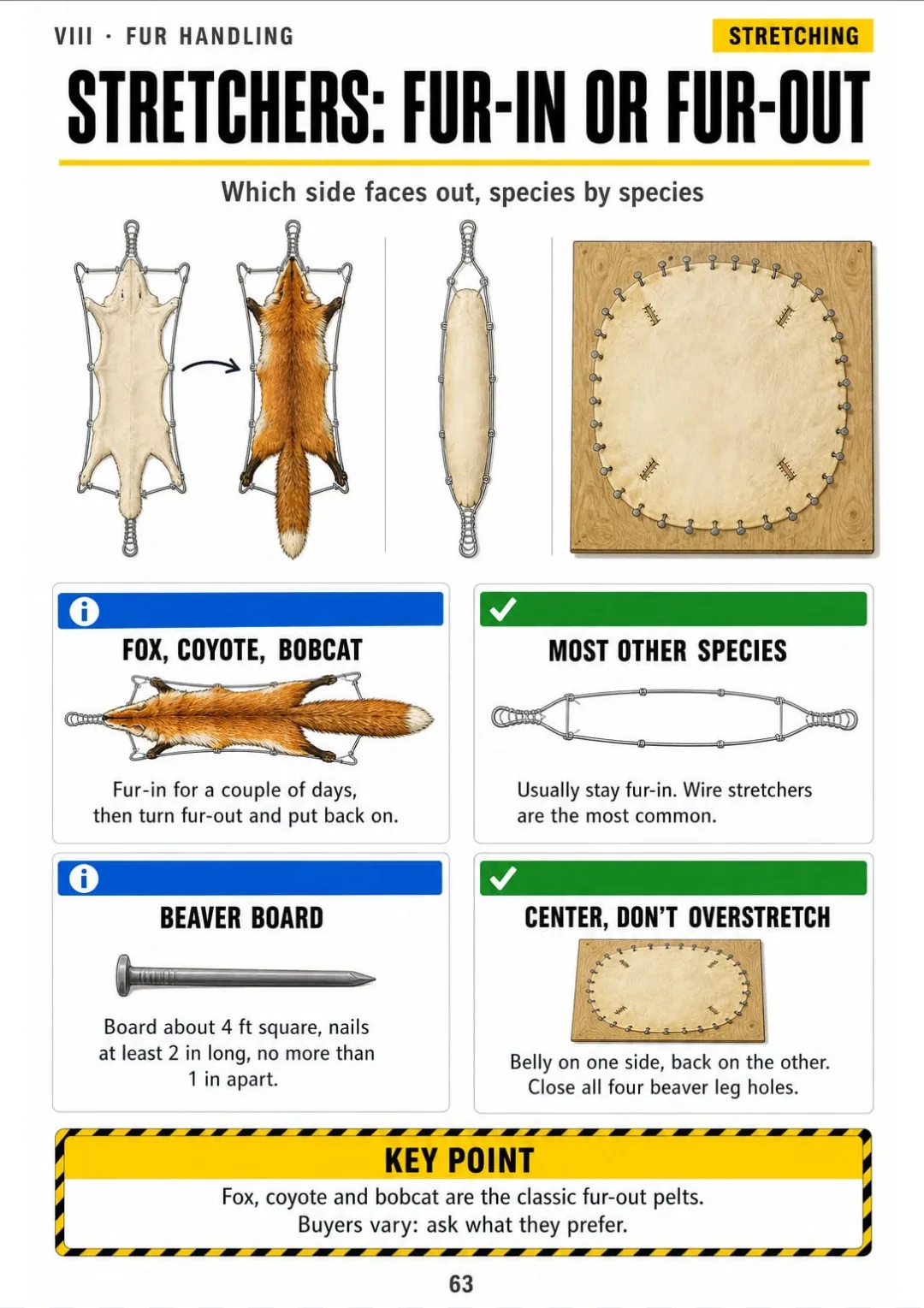
Fox, coyote and bobcat: fur-in a couple of days, then fur-out.
Six boxes to fill for your state: check interval, body-grip limits, cable, tags, distance, bait.

Swipe to see more →

These are real pages from the book. The table of contents is the full one: 9 parts and 64 topics.

The Problem Isn't You. It's How It Was Explained to You.

It's early in the season. You're standing at the edge of a frozen beaver pond with your trap basket, and you can't remember how thick the ice has to be before you walk out to that channel set.

Your manual covered it, somewhere in a chapter of paragraphs about ice, waders, cold water and hypothermia. A paragraph doesn't come back to you on the bank.

Clear ice: 3 in for one person, 6 in for groups. Hypothermia can start at 50 °F.

In this book, water safety is one page: clear ice drawn in layers, 4 inches before you step out, more for a group, and a thermometer marked at 50 °F, where hypothermia can start.

The drowning set, trap check intervals, releasing a dog from a body-grip, coyote vs bobcat tracks and fur-in or fur-out stretchers: each one has its own page, drawn the same way.

You look once, you get it, and you make the call on the ice without going back to the manual.

COMPARE FOR YOURSELF

Same Topic, Two Ways to Study It

THIS
  • The manual: line after line
  • Trap parts explained only in words
  • You walk into the course with doubts
The foothold trap consists of two jaws hinged on a frame and held open under tension by one or more springs, which may be of the long-spring or coil-spring type. When the trap is set, the dog is placed across one jaw and engaged in the notch of the pan, so that downward pressure on the pan releases the dog and allows the springs to close the jaws. Pan tension, jaw spread and jaw type should be considered in relation to the target species and applicable state regulations.
FOR THIS
  • The foothold trap in one drawing
  • Every part labeled in a box
  • You see it and you get it
Cage traps hold alive; dog-proof traps need a pull to fire
CONTENTS

Take a Look at the 9 Parts and 64 Topics

Your course and the rules, furbearers, tracks and sign, traps and equipment, dry-land sets, water sets, trap checks and releases, fur handling and test-day review: 68 pages, all illustrated.

ITrapping Today & Your Course · pp. 5-11
  1. How This Book Follows Your Course
  2. Why Trapping Is Regulated
  3. Trapper Ethics & How the Public Sees You
  4. Licenses, Seasons & Harvest Reports
  5. Landowner Permission, in Writing
  6. Trap ID Tags & Marking
  7. What 'BMP-Tested' Traps Mean
IIKnow Your Furbearers · pp. 12-23
  1. Furbearer Families at a Glance
  2. Beaver
  3. Muskrat
  4. Mink
  5. River Otter
  6. Raccoon
  7. Red Fox vs Gray Fox
  8. Coyote
  9. Bobcat
  10. Skunk & Opossum
  11. Fisher, Marten & Weasel
  12. Protected Animals & Look-Alikes
IIITracks, Sign & Where to Set · pp. 24-29
  1. Reading a Track: Toes and Claws
  2. Canine vs Feline Track
  3. Raccoon, Opossum & Skunk Tracks
  4. Tracks at the Water's Edge
  5. Scat & Sign
  6. Travel Routes & Pinch Points
IVTraps & Equipment · pp. 30-39
  1. The Four Trap Families
  2. Foothold Trap Anatomy
  3. Foothold Sizes by Species
  4. Offset, Laminated & Padded Jaws
  5. Body-Grip Trap Anatomy & Sizes
  6. Setting a Body-Grip Safely
  7. Cable Restraints
  8. Cage Traps & Dog-Proof Traps
  9. Anchoring Your Trap
  10. Trap Prep: Clean, Dye, Wax, Tune
VDry-Land Sets, Step by Step · pp. 40-46
  1. The Same 6 Steps for Every Set
  2. Dirt Hole Set
  3. Flat Set & Scent Post
  4. Trail Set (Blind Set)
  5. Cubby Set
  6. Lure, Bait & Urine: Which Does What
  7. Placement That Keeps Non-Targets Out
VIWater Sets, Step by Step · pp. 47-53
  1. Water Safety for the Trapper
  2. Pocket Set for Raccoon & Mink
  3. Muskrat Runs & Den Entrances
  4. Beaver: Castor Mound & Channel Sets
  5. Culvert Sets
  6. The Drowning Set
  7. Otter: Latrines & Slides
VIITrap Checks, Releases & Dispatch · pp. 54-58
  1. Trap Check Interval: Count the Hours
  2. Approaching a Catch
  3. Releasing a Non-Target from a Foothold
  4. Releasing a Dog from a Body-Grip
  5. Humane Dispatch: What Your Course Covers
VIIIFur Handling · pp. 59-65
  1. Handling Animals Safely
  2. Prime Fur: When It's Worth It
  3. Case Skinning vs Open Skinning
  4. Fleshing
  5. Stretchers: Fur-In or Fur-Out
  6. Drying & Storing Pelts
  7. Selling & Pelt Tags
IXReview & Test Day · pp. 66-68
  1. The Numbers to Know
  2. Course Day Checklist
  3. Your First Season Checklist

One Page, One Topic, All Clear

Think of it this way:

It's your first morning on the line. You walk up to a set and there's a neighbor's dog caught in it, scared and pulling.

You've already seen the page on releasing a dog from a body-grip: squeeze, turn, latch one spring, latch the other, slide out, every step drawn, plus the 4-foot rope that helps.

Florida 24 h, Virginia 72 h for submerged body-grips, Minnesota counts calendar days

Same with the drowning set, the dirt hole set, canine vs feline tracks, trap check intervals and stretchers: each one on its own page.

Trapping & Fur Handling Illustrated is 9 parts and 64 topics, all drawn, and at the end, the numbers to know for your state plus your course day and first season checklists.

What you see drawn, you don't have to memorize.

What's Inside Trapping & Fur Handling Illustrated:

Ipp. 5-11

Trapping Today & Your Course

How the book follows your course, why trapping is regulated, ethics, licenses and seasons, written landowner permission, trap tags and what BMP-tested traps mean.

IIpp. 12-23

Know Your Furbearers

Furbearer families at a glance, then beaver, muskrat, mink, otter, raccoon, red and gray fox, coyote, bobcat, skunk, opossum, fisher, marten, weasel and the protected look-alikes.

IIIpp. 24-29

Tracks, Sign & Where to Set

Reading toes and claws, canine vs feline tracks, raccoon, opossum and skunk prints, tracks at the water's edge, scat and sign, travel routes and pinch points.

IVpp. 30-39

Traps & Equipment

The four trap families, foothold anatomy and sizes, offset, laminated and padded jaws, body-grips and how to set them safely, cable restraints, cage traps, anchoring and trap prep.

Vpp. 40-46

Dry-Land Sets, Step by Step

The same 6 steps for every set, then the dirt hole, flat set, trail set and cubby, what lure, bait and urine each do, and placement that keeps non-targets out.

VIpp. 47-53

Water Sets, Step by Step

Water safety, pocket sets for raccoon and mink, muskrat runs, beaver castor mound and channel sets, culvert sets, the drowning set and otter latrines.

VIIpp. 54-58

Trap Checks, Releases & Dispatch

Counting the hours of your check interval, approaching a catch, releasing a non-target from a foothold, freeing a dog from a body-grip and what your course covers on dispatch.

VIIIpp. 59-65

Fur Handling

Handling animals safely, prime fur, case vs open skinning, fleshing, fur-in or fur-out stretchers, drying and storing pelts, selling and pelt tags.

IXpp. 66-68

Review & Test Day

The numbers to know for your state, a course day checklist and your first season checklist.

At the end of the book: The numbers to know for your state, a course day checklist and a first season checklist.
Plus: 2 Free Books

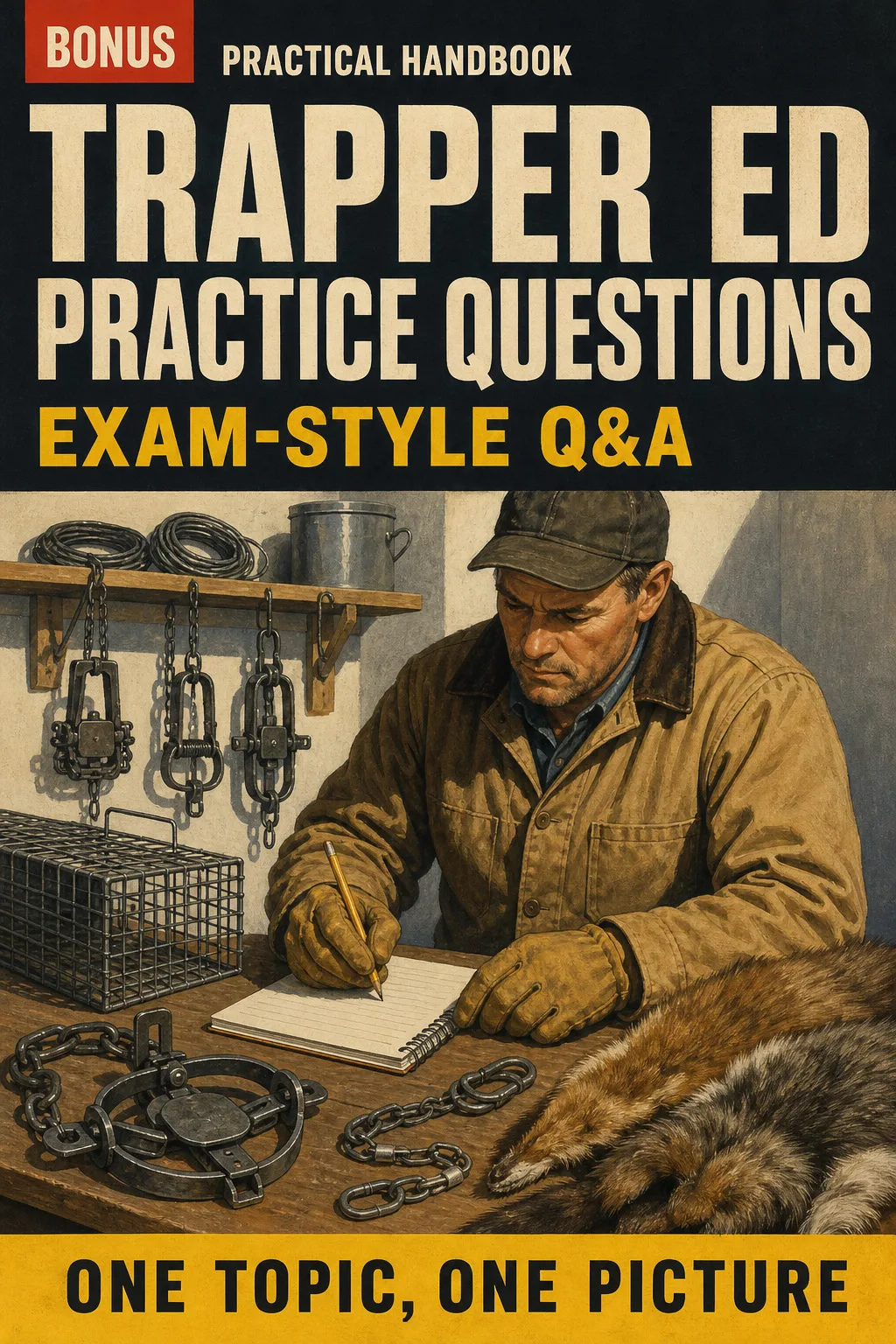
Trapper Ed Practice Questions: Exam-Style Q&A

BONUS 1: «Trapper Ed Practice Questions: Exam-Style Q&A»

Value on its own: US$ 17.90

Test yourself with exam-style questions and clear answers, so the written test feels familiar before you walk in.

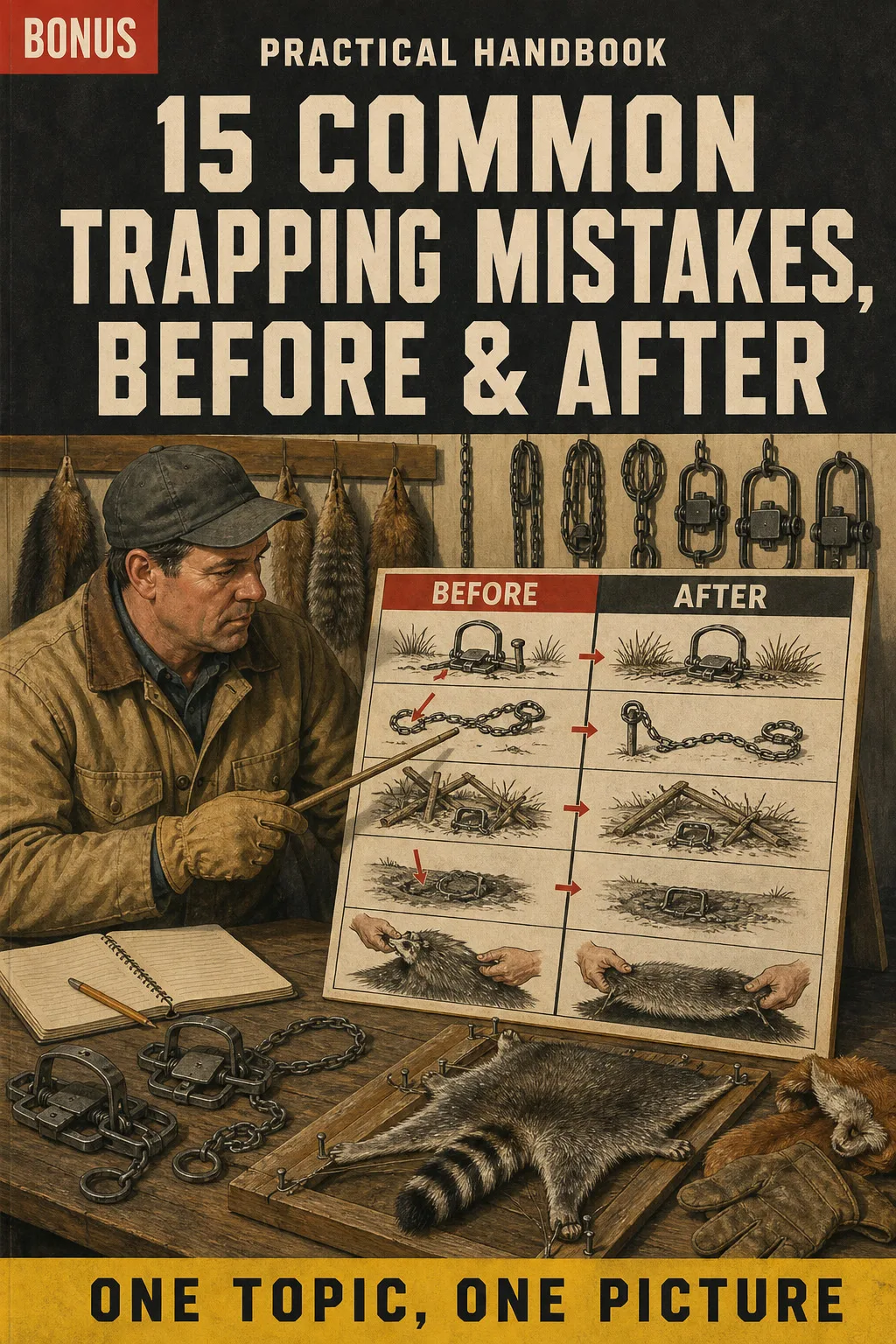
15 Common Trapping Mistakes, Before & After

BONUS 2: «15 Common Trapping Mistakes, Before & After»

Value on its own: US$ 14.90

See the most common set, placement and fur-handling mistakes drawn next to the right way, so you spot them before they happen on your line.

Trapping & Fur Handling Illustrated with 2 Free Books

  • Trapping & Fur Handling Illustrated: 68 illustrated pagesUS$ 63
  • BONUS 1: Trapper Ed Practice Questions: Exam-Style Q&AUS$ 17.90
  • BONUS 2: 15 Common Trapping Mistakes, Before & AfterUS$ 14.90
  • High-resolution PDF to printIncluded
Total value US$ 95.80
YOUR PRICE:
US$ 27
You save US$ 68.80
YES, I WANT TRAPPING & FUR HANDLING ILLUSTRATED FOR US$ 27

📄 This is a digital PDF book sent to your email: nothing is printed or shipped.

Secure purchaseEncrypted payment30-day guarantee

PDF by email: We email you Trapping & Fur Handling Illustrated as a PDF, together with the two free books. It's a single payment: no installments, no extra charges.

Who This Book Is For

You're studying for trapper ed

You're studying for trapper ed

Every furbearer, trap and set is one drawn page, so you go through the course one topic at a time instead of rereading chapters.

Your course date is close

Your course date is close

The numbers to know and the course day checklist sit at the end, so the last review takes an evening, not a weekend.

You already trap, or you're coming back

You already trap, or you're coming back

The topics that change by state are marked VERIFY, so you see what to check against your state's current rules before your first set.

Everything You Get Today

US$ 95.80US$ 27
YES, I WANT TRAPPING & FUR HANDLING ILLUSTRATED FOR US$ 27

📄 This is a digital PDF book sent to your email: nothing is printed or shipped.

30DAYS
GUARANTEE

30-Day Guarantee

Try Trapping & Fur Handling Illustrated for 30 days, bonus books included.

We refund everything if the file won't open, if the book isn't what you see here, if you were charged twice or if the email doesn't arrive. Just email us.

You pay once. No subscriptions.

Frequently Asked Questions

Is it for me if I've never trapped, or if I'm coming back after years away?

Yes. It starts from the course basics and draws every step, and the topics that may have changed since you last trapped (trap sizes, check intervals, cable restraints) are marked to check against your state.

Does it work for my state's course, and where does the content come from?

Yes, as a study book for any state's trapper ed course: furbearers, tracks, traps, sets and fur handling work the same way everywhere. What changes by state (seasons, trap sizes, check intervals, cable restraints) is marked VERIFY, and the numbers-to-know page has boxes where you write in your state's rules from your wildlife agency. Traps are cross-checked against the national Best Management Practices (BMPs) for trapping.

Is this official material?

No. It's an independent illustrated study book. It isn't issued, approved or endorsed by any agency, association or course.

Does it replace the trapper education course?

No. Where the course is required, you still take it and pass it to get your certificate and your license. The book doesn't give a certificate or count toward one: it helps you study the course, review it and keep the steps at hand.

Are the practice questions the ones on the test?

No. They're exam-style questions written for this book, to practice the topics. They are not official test questions.

When and how do I get it?

As a PDF by email, at the address you enter at checkout. The 2 bonus books come the same way. It's a one-time payment, no subscription.

I already have the course manual and YouTube videos. What does this add?

The same topics, one per page, in one order: each set drawn step by step, each trap with its parts labeled, the numbers in a box. You find the page in seconds, print it and take it to the truck, instead of scrolling a chapter or a 20-minute video.

Can I have it on paper?

Yes. The PDF is made to print, so you can keep the pages in your truck or your trap basket.

How does the refund work?

You have 30 days. We refund everything if the file won't open, if the book isn't what you see on this page, if you were charged twice or if the email doesn't arrive: just email us.

Before You Close This Page

No more rereading the manual with nothing sticking.

The drowning set: you see it drawn and you've got it.

You walk into your course knowing where everything is.

Drawings make studying faster.

The book is right below.

One-time payment: US$ 27 · Guarantee: 30 days · PDF by email

YES, I WANT TRAPPING & FUR HANDLING ILLUSTRATED FOR US$ 27

📄 This is a digital PDF book sent to your email: nothing is printed or shipped.